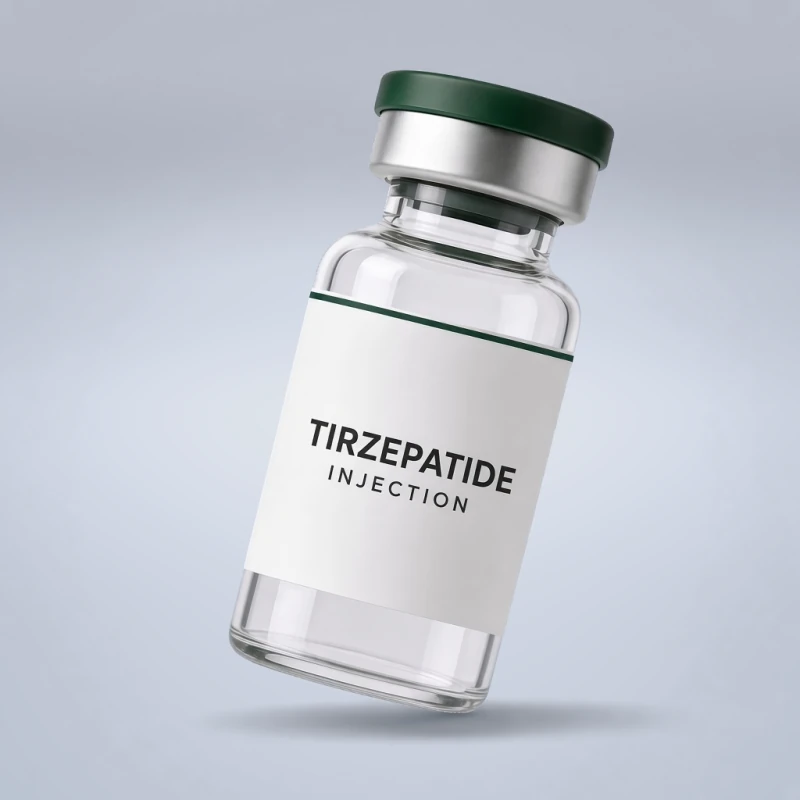
May quiet appetite and cravings through two gut hormones, GLP-1 and GIP.
May help with:
Tirzepatide acts on two gut hormones, GLP-1 and GIP, that signal fullness and help regulate appetite. A state-licensed U.S. pharmacy compounds it for you. Compounded medications are not FDA-approved.
A small injection under the skin, once a week, unless otherwise instructed. Your clinician starts you on a low dose and raises it step by step.
From $289 a month on the 3-month plan, $269 on the 6-month plan. Your clinician starts low and adjusts the dose. No insurance needed.
Includes:
Often eligible for FSA/HSA reimbursement.



About your health and goals, in minutes.
Within 48 hours. Card held, not charged.
If prescribed, shipped within a few days.
Your clinician decides which belongs in your protocol.
You're hereActs on two gut hormones, GLP-1 and GIP. Once a week.
From $289 per month, including clinician review and shipping
AlternativeActs on GLP-1. Once a week.
From $189 per month, including clinician review and shipping
Both compounded, not FDA-approved. Your clinician decides which belongs in your protocol.
Some people notice less appetite within the first weeks. Weight change builds over months. Responses are individual.
Your clinician starts low and raises it step by step over the first weeks, which keeps side effects down and finds the dose that works for you.
Tell your clinician everything you take. Tirzepatide can change how oral medications are absorbed, including birth control pills, and can lower blood sugar further with insulin or sulfonylureas.
Appetite often returns and some weight may come back. Your clinician can plan a gradual step-down, and your protocol helps you hold your progress.
The injection goes in the fridge, not the freezer. It ships cold and discreetly packed.
Compounded tirzepatide is prescribed by a licensed clinician and prepared by a state-licensed pharmacy for an individual patient. Compounded medications are not FDA-approved, and the FDA has not reviewed them for safety, effectiveness or quality.
Possible thyroid tumors, including cancer. In animal studies, tirzepatide caused thyroid C-cell tumors. It is not known whether it causes these tumors in people. Do not use it if you or a family member has had medullary thyroid carcinoma (MTC), or if you have Multiple Endocrine Neoplasia syndrome type 2 (MEN 2). Tell your clinician about a lump or swelling in your neck, trouble swallowing, hoarseness or shortness of breath.
Serious side effects may include inflammation of the pancreas (stop and seek care for severe stomach pain that won’t go away), gallbladder problems, low blood sugar (higher risk with insulin or sulfonylureas), kidney problems from dehydration, serious allergic reactions, changes in vision in people with type 2 diabetes, depression or thoughts of suicide, and food or liquid getting into the lungs during procedures with anesthesia or deep sedation. Tell your clinician before any planned procedure.
Before you start, tell your clinician about all your medical conditions and medications, and if you are pregnant, breastfeeding or planning to be. Tirzepatide may make birth control pills less effective; your clinician may advise a non-oral method or a backup method for 4 weeks after starting and after each dose increase.
Common side effects include nausea, diarrhea, vomiting, constipation, stomach pain and indigestion, mostly in the weeks after a dose increase. This is not a complete list. Call your clinician for medical advice about side effects. You may report side effects to the FDA at 1-800-FDA-1088 or www.fda.gov/medwatch.