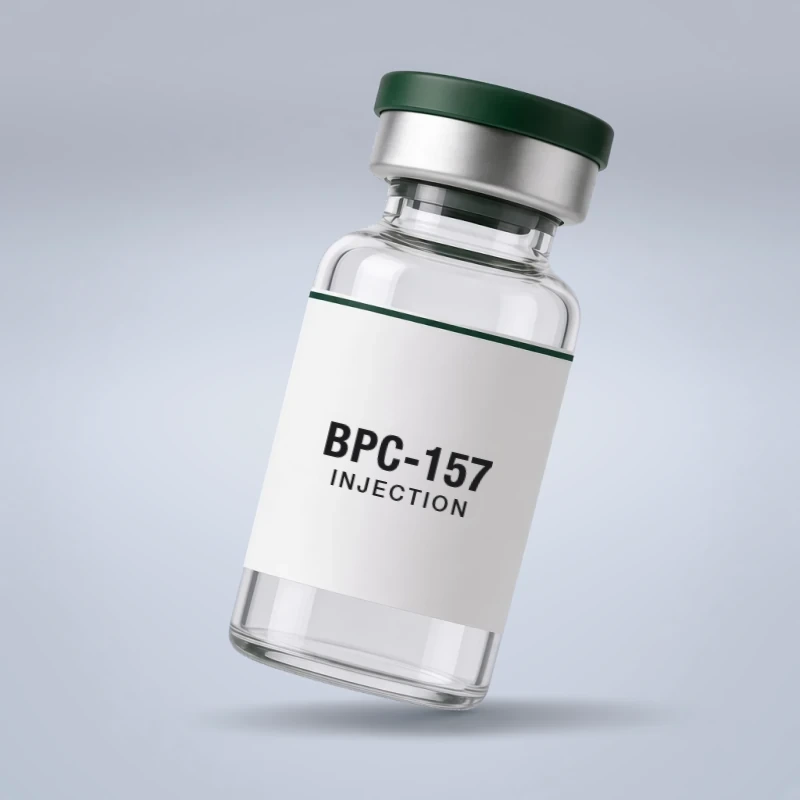
BPC-157 injection vial
Fix it. · Repair body

BPC-157

A repair peptide that signals new blood supply to injured tissue.

Helps with:

  • Muscle injuries
  • Gut lining
  • Tendons & joints
What is it?

A peptide, a short chain of 15 amino acids, copied from a protective protein your stomach makes. When you are injured, your body sends signals to grow new blood vessels and call in repair cells. BPC-157 acts on those same signals.

How do I take it?

A small injection under the skin, on the schedule your clinician sets. It arrives ready to use, with the supplies you need.

What does it cost?

From $219 a month on the 3-month membership, $209 on the 6-month membership. No insurance needed.

Includes:

  • Free clinician review
  • Free discreet shipping
  • Free ongoing medical support

FSA/HSA eligible; check with your plan provider.

Important safety information
What BPC-157 is for

Repair, where it’s needed.

Get started
BPC-157, TB-500 or KPV?

Three peptides, three jobs.

BPC-157TB-500KPV
What it is:A 15-amino-acid peptide from a protective protein in your stomachA short piece of thymosin beta-4, a repair protein found in almost every cellA three-amino-acid piece of alpha-MSH, a hormone that calms inflammation
What it does:Grows new blood vessels into the injury and calls in repair cellsHelps your body move repair cells to where healing is needed mostCalms the signals that keep tissue inflamed
Best for:One injury, like a strained muscle or sore tendonDeeper, older injuries or more than one sore spotInjuries that stay swollen or irritated, in joints or gut

Questions about BPC-157

Why would I take it?

Your body repairs itself more slowly as you get older: the cells that rebuild muscle and tendon become fewer and less active, and old injuries flare up more easily. Some of it is age, some of it is the body you were born with. BPC-157 is taken to support repair where it has slowed, alongside the rest and rehab that do the heavy lifting.

What is the history?

Researchers at the University of Zagreb first described BPC-157 in the early 1990s. A Croatian drug company later tested it for bowel inflammation but never brought it to market. More than a hundred studies, almost all in animals, show faster healing of muscle, the gut lining, tendons and joints. Studies in people are still small, and placebo-controlled trials in hamstring strains and after shoulder surgery are registered. It is prescribed off-label and compounded for you.

How do I monitor it, and what happens when I stop?

No routine blood work is needed for BPC-157 itself. Your clinician checks how the injury responds. When you stop, nothing rebounds.

Can I go on and off it?

Yes. BPC-157 is usually taken in courses, so going on and off is the normal pattern: a course while you recover, a pause, another course if an injury flares. Your clinician sets the length of each.

Will my body stop repairing on its own?

No. BPC-157 is not a hormone, so it does not signal your body to make less of anything. Your own repair keeps working the same way when you stop.

How soon will I notice a difference?

It depends on the injury. Muscle usually responds sooner than tendon, so give a course several weeks before you judge it. BPC-157 works alongside a rehab plan, not instead of one.

Important safety information
How it works

Three simple steps.

Clinician reviewing an intake on a laptop
  1. 1
    Answer a few questions

    About your health and goals, in minutes.

  2. 2
    Get a clinician's review

    Within 48 hours. Card held, not charged.

  3. 3
    Receive your protocol

    If prescribed, shipped within a few days.

Get started

faber ∞ protocol, a brand you can trust.

U.S. state-licensed clinicians.After a review of your health history.
U.S. state-licensed pharmacies.Discreetly shipped to your door.
Encrypted & private data.HIPAA-protected, SOC 2 audited systems.
Third-party audited & certified.By LegitScript, an independent auditor.
More from faber ∞ protocol

Explore other goals.

Important safety information

BPC-157 is a compounded medication. Compounded drugs are permitted to be prescribed under federal law, but are not FDA-approved and do not undergo FDA safety, effectiveness, or manufacturing review. Prescriptions are issued only if a licensed clinician finds treatment appropriate. Use only the dose and schedule your clinician sets. Studies in people are limited, so its full safety profile is not yet known. Common side effects include redness, itching or a small bump at the injection site, headache, nausea, flushing and dizziness. Do not use if you have or have had cancer, because BPC-157 promotes new blood vessel growth, or if you are pregnant, breastfeeding or under 18. BPC-157 is banned at all times by the World Anti-Doping Agency; do not use it if you are tested in sport. Tell your clinician about all medications and supplements you take, including blood thinners and anti-inflammatory painkillers. Store as your pharmacy label says. This is not a complete list; your clinician will review risks with you.