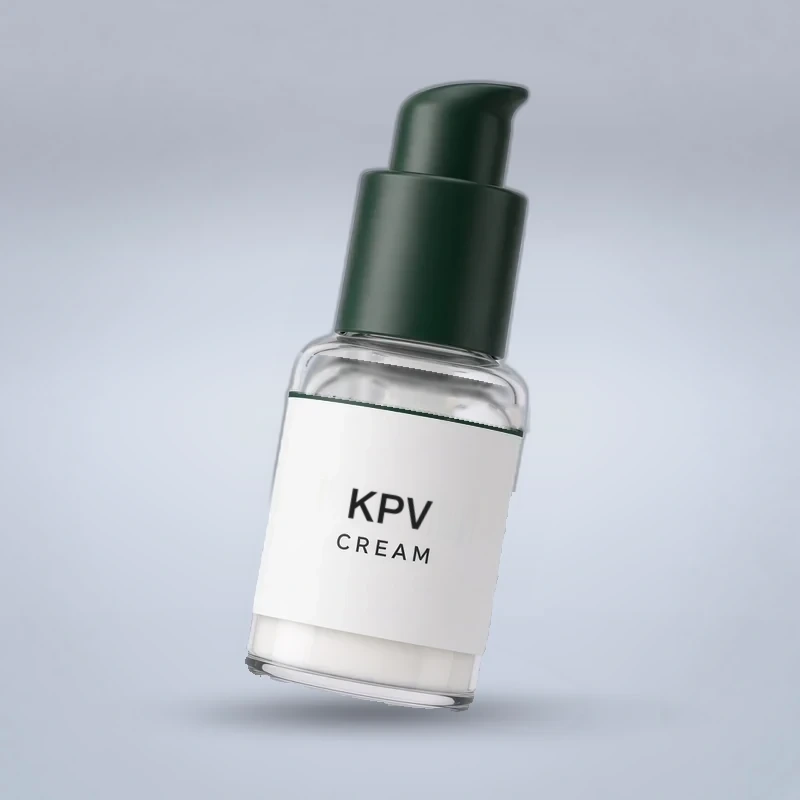
KPV cream
Fix it. · Repair body
Coming soon

KPV

A three-amino-acid peptide that calms the signals that keep tissue inflamed.

Helps with:

  • Gut lining
  • Swollen joints
  • Lingering inflammation
What is it?

A piece of a hormone your body uses to calm inflammation (alpha-MSH). It turns down the signals that keep tissue inflamed, in the gut and in joints.

How do I take it?

A thin layer on clean skin, on the schedule your clinician sets.

What does it cost?

From $219 a month on the 3-month membership, $209 on the 6-month membership. No insurance needed.

Includes:

  • Free clinician review
  • Free discreet shipping
  • Free ongoing medical support

FSA/HSA eligible; check with your plan provider.

Important safety information
What KPV is for

Calm what keeps flaring.

Get notified
BPC-157, TB-500 or KPV?

Three peptides, three jobs.

BPC-157TB-500KPV
What it is:A 15-amino-acid peptide from a protective protein in your stomachA short piece of thymosin beta-4, a repair protein found in almost every cellA three-amino-acid piece of alpha-MSH, a hormone that calms inflammation
What it does:Grows new blood vessels into the injury and calls in repair cellsHelps your body move repair cells to where healing is needed mostCalms the signals that keep tissue inflamed
Best for:One injury, like a strained muscle or sore tendonDeeper, older injuries or more than one sore spotInjuries that stay swollen or irritated, in joints or gut

Questions about KPV

Why would I take it?

Inflammation is how repair starts, and it is supposed to switch off again. With age, hard training and old injuries, it often stays on at a low level: joints stay puffy, the gut stays irritated, recovery drags. KPV is taken to turn that background inflammation down so repair can finish.

What is the history?

KPV is the last three amino acids of alpha-MSH, a hormone researchers have studied for decades for how it calms inflammation. Animal studies, many from Georgia State University, show KPV calming inflammation in the gut. It has not yet been tested in human trials. It is prescribed off-label and compounded for you.

How do I monitor it, and what happens when I stop?

No routine blood work is needed for KPV itself; your clinician reviews how you respond. When you stop, nothing rebounds.

How is it different from a supplement like turmeric?

Turmeric is a food compound your body absorbs poorly. KPV is a peptide copied from your body’s own anti-inflammatory hormone, in a dose your clinician sets.

How is it different from BPC-157?

BPC-157 grows new blood supply into an injury. KPV calms the inflammation around it. Some men take both, as two separate prescriptions.

Can I go on and off it?

Yes. KPV is taken in cycles, and your clinician sets the length of each.

Important safety information
How it works

Three simple steps.

Clinician reviewing an intake on a laptop
  1. 1
    Answer a few questions

    About your health and goals, in minutes.

  2. 2
    Get a clinician's review

    Within 48 hours. Card held, not charged.

  3. 3
    Receive your protocol

    If prescribed, shipped within a few days.

Get notified

faber ∞ protocol, a brand you can trust.

U.S. state-licensed clinicians.After a review of your health history.
U.S. state-licensed pharmacies.Discreetly shipped to your door.
Encrypted & private data.HIPAA-protected, SOC 2 audited systems.
Third-party audited & certified.By LegitScript, an independent auditor.
More from faber ∞ protocol

Explore other goals.

Important safety information

KPV is a compounded medication. Compounded drugs are permitted to be prescribed under federal law, but are not FDA-approved and do not undergo FDA safety, effectiveness, or manufacturing review. Prescriptions are issued only if a licensed clinician finds treatment appropriate. Use only the dose and schedule your clinician sets. Studies in people are limited, so its full safety profile is not yet known. Do not use if you are pregnant or breastfeeding. Tell your clinician if you have an autoimmune condition or take medicines that suppress the immune system, and about all medications and supplements you take. Store as your pharmacy label says. This is not a complete list; your clinician will review risks with you.