How much sleep do you actually need?
- Seven or more hours a night
- The same wake time, seven days a week
- Daylight in the morning, darkness at night
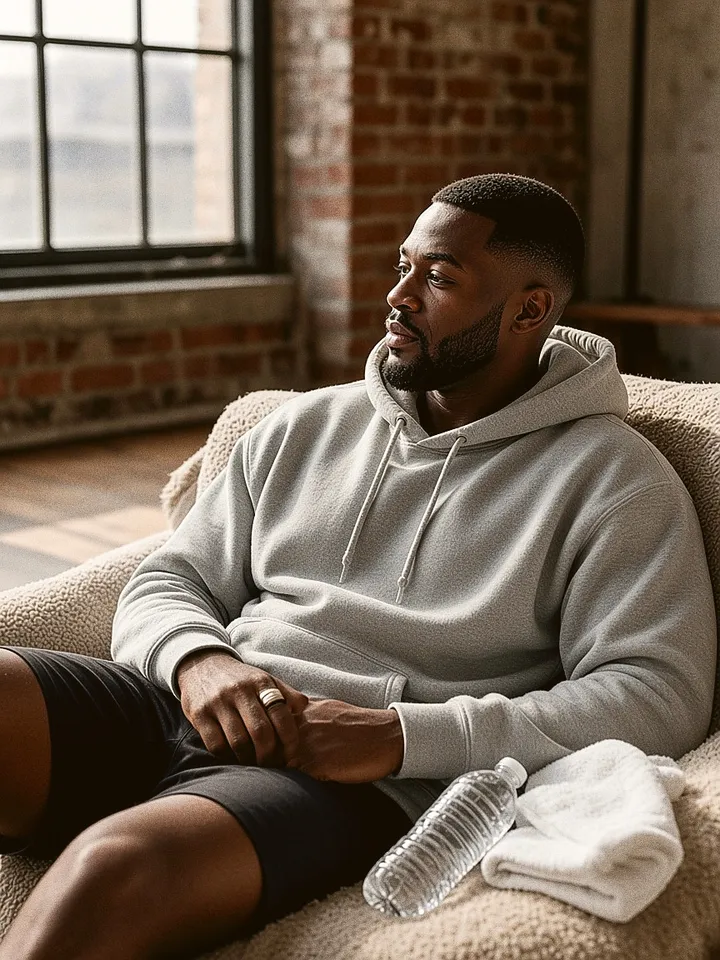
The protocol in nine steps.
Adults aged 18 to 60 should sleep seven or more hours a night on a regular basis, according to the 2015 joint consensus statement of the American Academy of Sleep Medicine and the Sleep Research Society. How consistently you hit that number may matter more than the number: across 60,977 adults tracked with wrist accelerometers, published in the journal SLEEP in 2024, the four most regular fifths had a 20 to 48 percent lower risk of death from any cause than the least regular fifth, and duration added nothing once regularity was accounted for. Chasing deep sleep or REM directly is the wrong target. In healthy adults about 45 percent of the night is light N2 sleep and roughly 25 percent each is deep N3 sleep and REM (StatPearls, US National Library of Medicine), and the only way to get more of any is to sleep longer, at the same time each day.
Protocol first, evidence second, the weak parts of our own advice last. The numbers come from the American Academy of Sleep Medicine, the National Center for Health Statistics, the University of Chicago, Harvard Medical School, the University of Colorado Boulder, and trials in SLEEP, PNAS and JAMA. Nothing here requires a purchase.
Fix your wake time, not your bedtime.
One wake time, seven days a week, weekends included. Regularity carries the strongest outcome data: in the 2024 SLEEP analysis it outperformed duration as a mortality predictor across 60,977 people. Bedtime follows within a week or two. If a single time is unrealistic, hold a two-hour band, say 6:30 to 8:30 a.m.
Budget more time in bed than the hours you want asleep.
To net seven hours, give yourself seven and a half to eight and a half. In 2024, 30.6 percent of US men averaged under seven, per the National Center for Health Statistics.
Stop optimizing for deep sleep.
You cannot request N3 or REM. Both follow from how long and how regularly you sleep. Deep sleep runs in longer blocks early in the night, and REM periods lengthen toward morning, per the National Institute of Neurological Disorders and Stroke.
Get outside within an hour of waking, for at least 10 minutes.
Morning daylight is the strongest input your body clock has. When eight adults spent a week camping without electrical light, their melatonin release shifted about two hours earlier on four times their usual light intensity, in a 2013 University of Colorado Boulder study in Current Biology. An expert consensus in PLOS Biology in 2022 set the daytime minimum at 250 lux melanopic EDI at eye level, a standardized measure of the light your circadian system responds to. Offices fall short. Outdoors, even under cloud, does not.
Give caffeine a curfew 8 to 10 hours before bed.
In a double-blind 2013 trial of 12 healthy sleepers in the Journal of Clinical Sleep Medicine, 400 mg of caffeine, roughly two to three cups of coffee, taken six hours before bedtime cut measured total sleep time by more than one hour. The participants did not notice. Caffeine's half-life in the average adult is about five hours (StatPearls, US National Library of Medicine), so a 4 p.m. espresso still has half its dose working at 9 p.m. Bed at 11 means last coffee by 1 p.m.
If you drink, treat alcohol as a dose, not a nightcap.
Alcohol shortens the time it takes to fall asleep, then degrades the physiology of the night. In 4,098 Finnish adults wearing continuous heart-rate monitors, published in JMIR Mental Health in 2018, physiological recovery in the first three hours of sleep fell 9.3 percent after low intake, 24.0 percent after moderate and 39.2 percent after high.
Keep it to one or two and finish three hours before bed. No dose in that dataset left sleep physiology untouched.
Take the lights down three hours before bed.
The same PLOS Biology consensus caps evening exposure at 10 lux melanopic EDI, and the bedroom itself at 1 lux. Kill the overheads, use lamps at hip height, keep the bedroom too dark to read in. Harvard researchers found 6.5 hours of blue light shifted circadian rhythms by 3 hours, against 1.5 hours for green light of comparable brightness.
In the last hour, keep bright screens off your face.
In a 2015 PNAS study of 12 adults by Harvard Medical School and Brigham and Women's Hospital researchers, reading on a light-emitting tablet before bed made people take nearly 10 minutes longer to fall asleep, cut their REM sleep and left them less alert next morning than a printed book.
Awake in bed more than about 20 minutes? Get up.
Leave the room, keep the lights low, do something dull, return when sleepy. This is stimulus control, which the American Academy of Sleep Medicine conditionally recommends as a standalone insomnia treatment in its 2021 guideline. Lying there frustrated teaches your brain that bed is where you are awake.
Why do we sleep?
Sleep is when the body does the work it cannot do while you are awake. Researchers still argue about the full list, but four jobs have human data behind them.
What deep sleep does
Deep sleep, the N3 stage, is the physical repair shift. In men, most of the day's growth hormone is released during deep sleep, and that hormone drives tissue repair and muscle maintenance. Deep sleep also fades early. In 149 healthy men aged 16 to 83 studied at the University of Chicago, it fell from nearly 20 percent of the night before age 25 to under 5 percent after 35, and growth hormone secretion fell by about 75 percent alongside it (JAMA, 2000).
What a short night costs
Muscle feels the loss quickly. After a single night without sleep, 13 healthy young adults built muscle protein 18 percent more slowly, with cortisol up 21 percent and testosterone down 24 percent (Physiological Reports, 2021).
So does appetite. After two nights of restricted sleep in 12 healthy young men, leptin, the hormone that signals fullness, fell 18 percent, ghrelin, the hunger hormone, rose 28 percent, and hunger rose 24 percent, with the strongest pull toward calorie-dense, high-carbohydrate food (Annals of Internal Medicine, 2004). If you are trying to lose weight, short sleep works against you.
The brain uses the night too. Sleep after learning helps fix new memories in place, with deep sleep and REM each playing a part (Physiological Reviews, 2013). The popular claim that sleep washes toxins out of the brain is less settled than it sounds: it rests mostly on mouse studies, and a 2024 study in Nature Neuroscience measured less clearance during sleep, not more.
None of this changes the protocol. You cannot order more deep sleep, and step 3 explains why. What you can do is give your body enough regular hours for every stage to run.

What to expect, and what this will not fix.
Expect your clock to move over three to seven days, regularity to feel different within a week or two, and the overall effect to be real but modest. The best-studied structured version of this, cognitive behavioral therapy for insomnia, delivered the following across 20 trials and 1,162 participants in a 2015 meta-analysis in Annals of Internal Medicine: 19 minutes faster to fall asleep, 26 fewer minutes awake in the night, and a 9.9 percentage point gain in sleep efficiency. That is roughly the ceiling for behavior change, and more than most supplements show.
It will not fix obstructive sleep apnea, which needs a diagnostic test. It will not fix chronic insomnia disorder, which affects roughly 6 to 10 percent of adults and for which the American College of Physicians recommends cognitive behavioral therapy first. It will not fix a permanent night shift.
Sleep is not a small lever for men in particular. When 10 healthy young men slept under five hours a night for eight nights at the University of Chicago, their daytime testosterone fell 10 to 15 percent, which the researchers compared to 10 to 15 years of aging. Published in JAMA, 2011. It is also the cheapest recovery variable in any training program.
We will be direct about our own catalog: none of our compounded medications is indicated for insomnia, and the nine steps come first. Some protocols touch sleep and recovery from the other side. Sermorelin may support the deep sleep phase, when your body releases most of its growth hormone. Glutathione may help your cells neutralize oxidative stress, for example from short nights, and NAD+ may help with the afternoon drop in energy. Whether any of them fits is a clinician's decision. If low energy and low libido persist after months of adequate sleep, that is a question for a clinician and a blood test.

Quick answers.
Why do we sleep?
To repair and reset. Deep sleep is when men release most of their growth hormone, and short sleep slows muscle building, raises hunger hormones and weakens memory.
Why is deep sleep important?
Deep sleep is the body's physical repair phase and the time of peak growth hormone release. It fades with age: in one study of 149 men it fell from nearly 20 percent of the night before age 25 to under 5 percent after 35.
How many hours of sleep do I need?
Seven or more per night if you are 18 to 60, per the American Academy of Sleep Medicine and Sleep Research Society consensus. Need varies, but regularly getting less is linked to worse health outcomes.
Is 6 hours of sleep enough?
For most adults, no. Six sits below the seven-hour floor in that consensus. Feeling fine on six is not the same as performing well on six.
How much deep sleep should I get?
About 25 percent of total sleep time, roughly 105 to 120 minutes on a seven to eight hour night. You cannot target it directly, and your wearable's estimate is unreliable.
How late can I drink coffee?
Eight to ten hours before bed. Caffeine six hours before bedtime cut total sleep time by more than an hour in a 2013 Journal of Clinical Sleep Medicine trial, without participants noticing.
Does alcohol help you sleep?
It helps you fall asleep and hurts the sleep that follows. In 4,098 adults, even low intake cut physiological recovery in the first three hours of sleep by 9.3 percent.
The evidence, if you want to go deeper.
Where the seven-hour number comes from
An AASM and SRS panel reviewed nine health categories with the best evidence on sleep duration and published its recommendation in the Journal of Clinical Sleep Medicine in 2015. The statement is a floor, not a range: seven or more hours.
What the regularity study actually measured
The 2024 SLEEP paper used seven days of wrist accelerometry from 60,977 UK Biobank participants. The Sleep Regularity Index scores how often you are in the same state, asleep or awake, at the same clock time on consecutive days. Follow-up averaged 6.3 years, with 1,859 deaths. It is observational: association, not proof.
Where this protocol stands on thin ice.
Most of what you just read is sleep hygiene, and the American Academy of Sleep Medicine explicitly recommends against sleep hygiene as a single-component treatment for chronic insomnia in adults. It is a reasonable start for a healthy person sleeping badly. It is not a treatment. If you have had insomnia for months, cognitive behavioral therapy is better supported than anything here.
The deep sleep number on your watch is probably wrong. In a 2025 SLEEP Advances test of six wrist wearables against clinical polysomnography in 62 adults, one device overestimated deep sleep by 73 minutes a night, and agreement with the lab standard ranged only from fair to moderate. Trends over weeks beat any single night's reading.
Several studies here are small: 12 participants for caffeine, 12 for tablet reading, 8 for camping, 10 for testosterone. Well controlled, but small. The alcohol study is the opposite, large but observational, and it measured heart rate variability rather than sleep stages.
The advice to avoid late meals is weaker than it sounds. In a randomized crossover trial in the Journal of Clinical Endocrinology and Metabolism in 2020, a 10 p.m. dinner did not change sleep architecture on polysomnography compared with a 6 p.m. dinner, though it did raise overnight glucose and cut fat oxidation. Eat earlier for metabolic reasons if you like, and place protein across the day the way our muscle-building guide sets out, but do not expect either to change your sleep.
The studies behind why we sleep are small as well: 13 adults for muscle protein and 12 men for appetite hormones, and both tested severe short-term sleep loss, not an ordinary six-hour night. The deep sleep and growth hormone figures come from observation, not from an experiment.
Sources (23)
- Watson NF, et al. "Recommended Amount of Sleep for a Healthy Adult: A Joint Consensus Statement of the American Academy of Sleep Medicine and Sleep Research Society." Journal of Clinical Sleep Medicine, 2015. aasm.org/resources/pdf/...
- Windred DP, et al. "Sleep regularity is a stronger predictor of mortality risk than sleep duration: A prospective cohort study." SLEEP, 2024. academic.oup.com/sleep/...
- Patel AK, Reddy V, Shumway KR, Araujo JF. "Physiology, Sleep Stages." StatPearls, NIH National Library of Medicine, updated 2024. ncbi.nlm.nih.gov/books/NBK526132
- National Institute of Neurological Disorders and Stroke. "Brain Basics: Understanding Sleep." National Institutes of Health. ninds.nih.gov/health-information/...
- Ng AE, Black LI, Adjaye-Gbewonyo D. "Short Sleep Duration and Sleep Difficulties Among Adults: United States, 2024." NCHS Data Brief No. 559, CDC National Center for Health Statistics, 2026. cdc.gov/nchs/products/databriefs/db559
- Wright KP Jr, et al. "Entrainment of the Human Circadian Clock to the Natural Light-Dark Cycle." Current Biology, 2013. University of Colorado Boulder summary. colorado.edu/today/2013/08/01/...
- Brown TM, et al. "Recommendations for daytime, evening, and nighttime indoor light exposure to best support physiology, sleep, and wakefulness in healthy adults." PLOS Biology, 2022. journals.plos.org/plosbiology/...
- Drake C, Roehrs T, Shambroom J, Roth T. "Caffeine Effects on Sleep Taken 0, 3, or 6 Hours before Going to Bed." Journal of Clinical Sleep Medicine, 2013. AASM summary. aasm.org/late-afternoon-and-early-evening-caffeine/...
- Evans J, Richards JR, Battisti AS. "Caffeine." StatPearls, NIH National Library of Medicine, updated 2024. ncbi.nlm.nih.gov/books/NBK519490
- Pietila J, Helander E, Korhonen I, Myllymaki T, Kujala UM, Lindholm H. "Acute Effect of Alcohol Intake on Cardiovascular Autonomic Regulation During the First Hours of Sleep in a Large Real-World Sample of Finnish Employees." JMIR Mental Health, 2018. mental.jmir.org/2018/1/e23
- Harvard Health Publishing, Harvard Medical School. "Blue light has a dark side." health.harvard.edu/staying-healthy/...
- Chang AM, Aeschbach D, Duffy JF, Czeisler CA. "Evening use of light-emitting eReaders negatively affects sleep, circadian timing, and next-morning alertness." PNAS, 2015. pnas.org/doi/10.1073/pnas.1418490112
- Edinger JD, et al. "Behavioral and psychological treatments for chronic insomnia disorder in adults: an American Academy of Sleep Medicine clinical practice guideline." Journal of Clinical Sleep Medicine, 2021. aasm.org/new-guideline-supports-behavioral/...
- Trauer JM, Qian MY, Doyle JS, Rajaratnam SMW, Cunnington D. "Cognitive Behavioral Therapy for Chronic Insomnia: A Systematic Review and Meta-analysis." Annals of Internal Medicine, 2015. pubmed.ncbi.nlm.nih.gov/26054060
- American College of Physicians. "Management of Chronic Insomnia Disorder in Adults: A Clinical Practice Guideline." Annals of Internal Medicine, 2016. acponline.org/acp-newsroom/...
- Leproult R, Van Cauter E. "Effect of 1 Week of Sleep Restriction on Testosterone Levels in Young Healthy Men." JAMA, 2011. University of Chicago Medicine summary. uchicagomedicine.org/forefront/news/...
- "Performance validation of six commercial wrist-worn wearable sleep-tracking devices for sleep stage scoring compared to polysomnography." SLEEP Advances, 2025. academic.oup.com/sleepadvances/...
- Gu C, et al. "Metabolic Effects of Late Dinner in Healthy Volunteers: A Randomized Crossover Clinical Trial." Journal of Clinical Endocrinology and Metabolism, 2020. pubmed.ncbi.nlm.nih.gov/32525525
- Van Cauter E, Leproult R, Plat L. "Age-Related Changes in Slow Wave Sleep and REM Sleep and Relationship With Growth Hormone and Cortisol Levels in Healthy Men." JAMA, 2000. University of Chicago Medicine summary. uchicagomedicine.org/forefront/news/...
- Lamon S, et al. "The effect of acute sleep deprivation on skeletal muscle protein synthesis and the hormonal environment." Physiological Reports, 2021. pmc.ncbi.nlm.nih.gov/articles/PMC7785053
- Spiegel K, Tasali E, Penev P, Van Cauter E. "Brief Communication: Sleep Curtailment in Healthy Young Men Is Associated with Decreased Leptin Levels, Elevated Ghrelin Levels, and Increased Hunger and Appetite." Annals of Internal Medicine, 2004. pubmed.ncbi.nlm.nih.gov/15583226
- Rasch B, Born J. "About Sleep's Role in Memory." Physiological Reviews, 2013. doi.org/10.1152/physrev.00032.2012
- Miao A, et al. "Brain clearance is reduced during sleep and anesthesia." Nature Neuroscience, 2024. Imperial College London summary. imperial.ac.uk/news/253273/...
This article is educational and is not medical advice, diagnosis or a treatment recommendation. Poor sleep can be a symptom of sleep apnea, depression or thyroid disease, and persistent insomnia should be evaluated by a clinician. Study findings describe group averages and do not predict your result. Prescription decisions at Faber are made by US-licensed clinicians after review of your history and, where indicated, laboratory testing.
The medicine is one part.
The protocol is the rest.
Every prescription comes with a plan for the habits around it.
Get started →